
If your sink drain drops straight down immediately after the trap, you likely have an S-trap — and in Ontario, that is a guaranteed inspection failure.
This issue is extremely common in DIY work and older renovations, and it often goes unnoticed until final inspection.
What an S-Trap Is
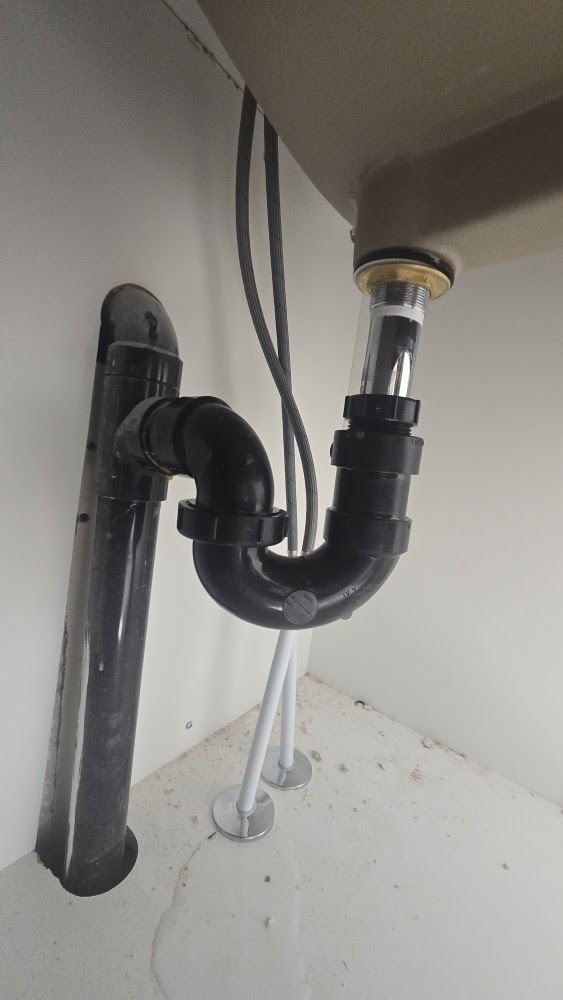
An S-trap occurs when the drain pipe drops vertically right after the trap, forming an “S” shape instead of allowing horizontal travel.
At first glance, the plumbing may appear to function normally. Water drains. There are no leaks— but the configuration creates a serious problem.
Why S-Traps Are Not Permitted
When a large volume of water discharges through an S-trap, it creates a siphoning effect.
This can:
- pull water out of the trap,
- eliminate the water seal,
- and allow sewer gases to enter the building.
Without a water seal, the plumbing system is no longer protecting occupants from methane and sewer gases.
The Missing Trap Arm
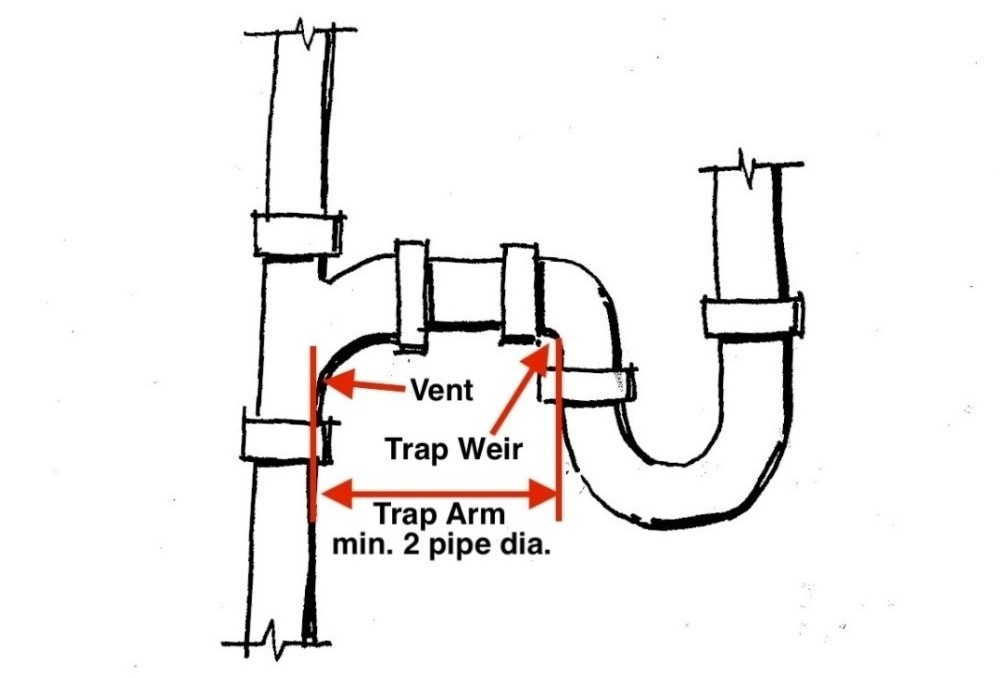
Ontario plumbing rules require a trap arm — a horizontal section of pipe between the trap and the vent.
This horizontal distance allows air to enter the system and prevents siphoning.
An S-trap has no effective trap arm, which is why it fails inspection even if it appears functional.
Why This Is Still Common
S-traps are frequently found because:
- older homes were built before current rules,
- DIY renovations reuse existing piping,
- tight cabinet spaces encourage vertical drops,
- or vent connections are misunderstood.
Unfortunately, “it’s been like this for years” does not make it acceptable.
What Inspectors Verify
During inspection, inspectors typically check:
- trap configuration,
- presence of a horizontal trap arm,
- vent connection,
- accessibility of cleanouts.
If an S-trap is identified, approval is not possible without correction.
Key Takeaway
If your drain drops straight down after the trap, it will fail inspection in Ontario — regardless of whether it drains properly.
Correct venting and trap configuration are required for approval.
Disclaimer: This article is for general educational purposes only. Building Code interpretation and enforcement may vary by municipality. Always confirm requirements with your local Authority Having Jurisdiction.